WhatsApp Marketing ROI and Metrics for Business Analytics


TL; DR: Quick Summary
- WhatsApp marketing leverages 2B+ users and high engagement to drive stronger ROI comparing to other traditional channels.
- Track core KPIs: delivery, open, engagement, CTR, and conversion rates to measure campaigns performance.
- Advanced metrics like revenue per recipient, cost per recipient, and return on campaign spend reveal true profitability.
- Use UTMs, GA4, and Google Tag Manager to track website conversions and WhatsApp lead sources accurately.
- Optimize ROI with segmentation, A/B testing, automation, and CRM integrations via the WhatsApp Business API.
- Case studies show up to 40X ROAS and 13X ROI using personalized broadcasts and automation tools like SleekFlow.
With WhatsApp's vast user base of over 2 billion and its higher engagement rates, businesses are increasingly exploring its potential as a powerful marketing tool. If you're questioning the effectiveness of WhatsApp marketing and the benefits of the WhatsApp Business API, this guide is tailored for you. We'll explore key metrics and strategies to maximize your WhatsApp marketing ROI.
Key Performance Indicators (KPIs) for WhatsApp Marketing
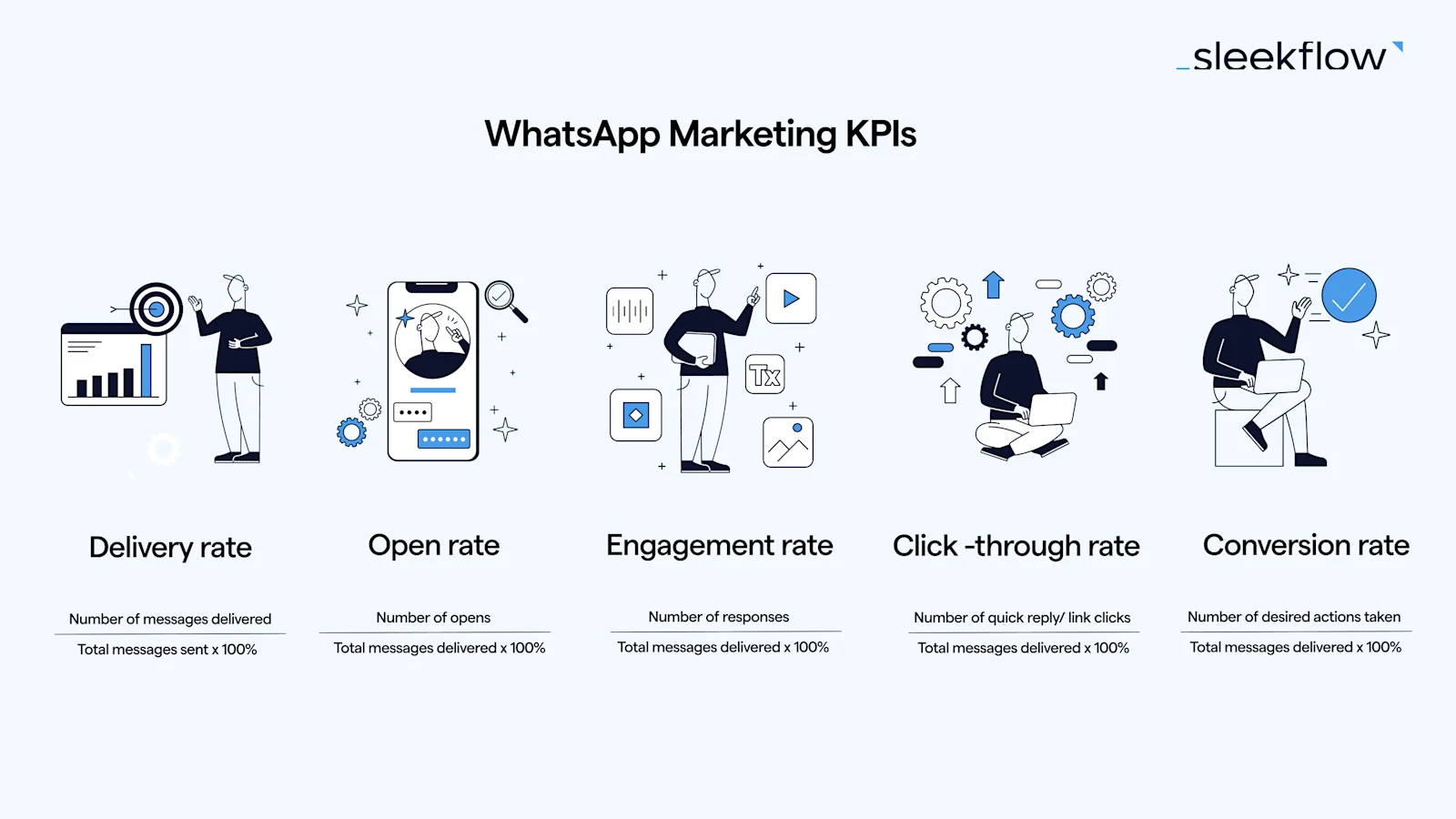
KPIs are essential for measuring the success of your WhatsApp marketing campaigns. These indicators not only track performance but also evaluate the cost-effectiveness of the WhatsApp Business API. Here are the crucial KPIs to monitor:
Delivery rate
Measures the efficiency of your message delivery, ensuring content reaches your audience.
Formula: (Number of messages delivered / Total messages sent) x 100%
Open rate
Reflects how compelling and relevant your content is to recipients.
Formula: (Number of opens / Total messages delivered) x 100%
Engagement rate
Gauges how many recipients interacted with your content.
Formula: (Number of responses / Total messages delivered) x 100%
Click-through rate (CTR)
Assesses the effectiveness of your call-to-actions (CTAs) within the message.
Formula: (Number of clicks / Total messages delivered) x 100%
Conversion rate
Tracks recipients who took a desired action, such as making a purchase or signing up for a newsletter.
Formula: (Number of desired actions / Total messages delivered) x 100%
3 advanced WhatsApp marketing metrics
For a deeper analysis, consider these advanced metrics to evaluate your WhatsApp marketing ROI and campaign profitability:
1. Revenue per recipient
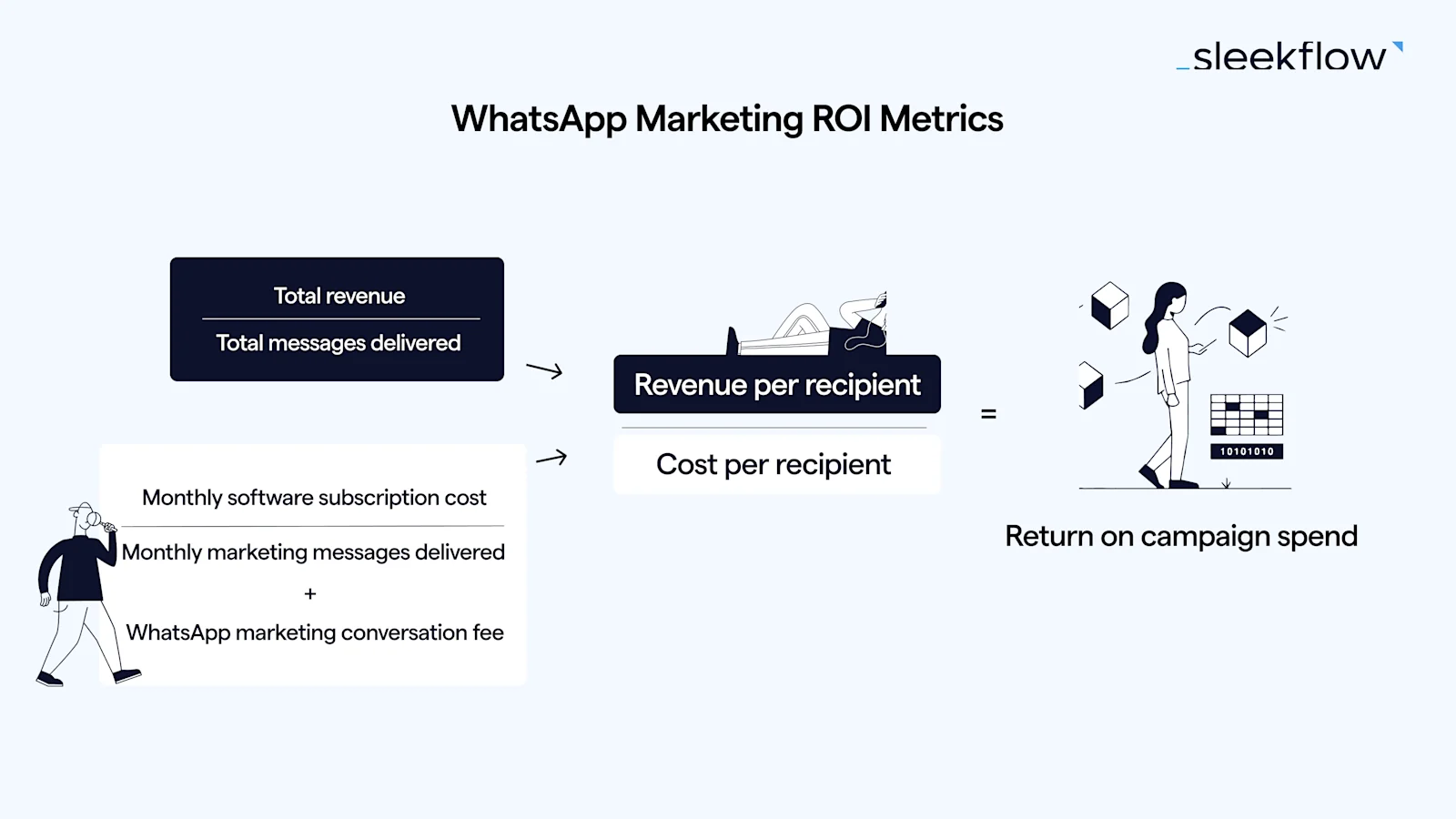
This metric provides insights into the average revenue generated from each recipient you engage with through your campaign
Formula: Total revenue / Total messages delivered
2. Cost per recipient
To understand the efficiency of your WhatsApp marketing campaign spending, this metric breaks down the average cost you incur for each recipient. When calculating the total campaign cost, consider the following:
WhatsApp marketing conversation cost: the fee you pay to WhatsApp for delivering a marketing template message to a particular country or region.
Software provider cost: a fixed monthly subscription cost. To accurately distribute this fixed cost, estimate the number of campaigns you'll run in a month. Then, for each campaign, determine how many messages you'll deliver. By dividing the monthly software cost by the total messages delivered in a month, you can ascertain the software cost per recipient.
source:https://business.whatsapp.com/products/platform-pricing
To calculate your cost per recipient, you need to understand the cost-effectiveness of your campaign in reaching potential buyers. This is known as Cost Per Reach, which measures how much it costs to reach each person in your target group.
Formula: WhatsApp marketing conversation cost + (Software provider monthly subscription cost / Total number of marketing messages delivered in a month)
3. Return on campaign spend
This metric gives a holistic view of the profitability of your WhatsApp marketing campaign by comparing the revenue generated per recipient to the cost incurred per recipient.
Formula: Revenue per recipient / cost per recipient
TKD Lingerie earned a 40X return on ad spend using SleekFlow’s WhatsApp Broadcast
TKD Lingerie, a boutique retailer specializing in D-K cup sizing, sought to improve the effectiveness of its marketing efforts and overcome the inefficiencies of email outreach.
Email-based campaigns were struggling with low visibility and engagement due to inbox clutter, limiting the brand’s ability to effectively reach and convert its audience.
TKD Lingerie used SleekFlow’s WhatsApp Business API to launch a personalized promotion. Over seven days, 4,500 segmented customers received targeted messages via WhatsApp.
Achieved a 40X Return on Ad Spend (ROAS).
Delivered a 74% open rate and 78 Online-to-Offline (O2O) sales conversions.
A lot of people prefer being contacted via their mobiles over email. We have seen a better open rate with SleekFlow Broadcasting and a really good return on Broadcasting messages.

Kate Kikano
Founder of TKD Lingerie
Tracking WhatsApp campaign performance for website conversions
Connect to WhatsApp Business API now!
Connect to WhatsApp Business API and unlock powerful tools to engage your audience.
You can track leads originating from WhatsApp links using a combination of URL parameters and analytics tools. Here's a step-by-step guide:
Step 1: Prepare UTM parameters
UTM (Urchin Tracking Module) parameters are tags you add to a URL. When someone clicks on a URL with UTM parameters, those tags are sent back to your analytics tool, and you can track where your traffic came from.
For example, if you have a website https://example.com, you can add UTM parameters to it like this:
https://example.com/?utm_source=whatsapp&utm_medium=social&utm_campaign=my_campaign
utm_source: Identifies which site sent the traffic. In this case, "whatsapp".
utm_medium: Identifies the medium. E.g., "social", "email", etc.
utm_campaign: Identifies your specific campaign.
Step 2: Share the link on WhatsApp
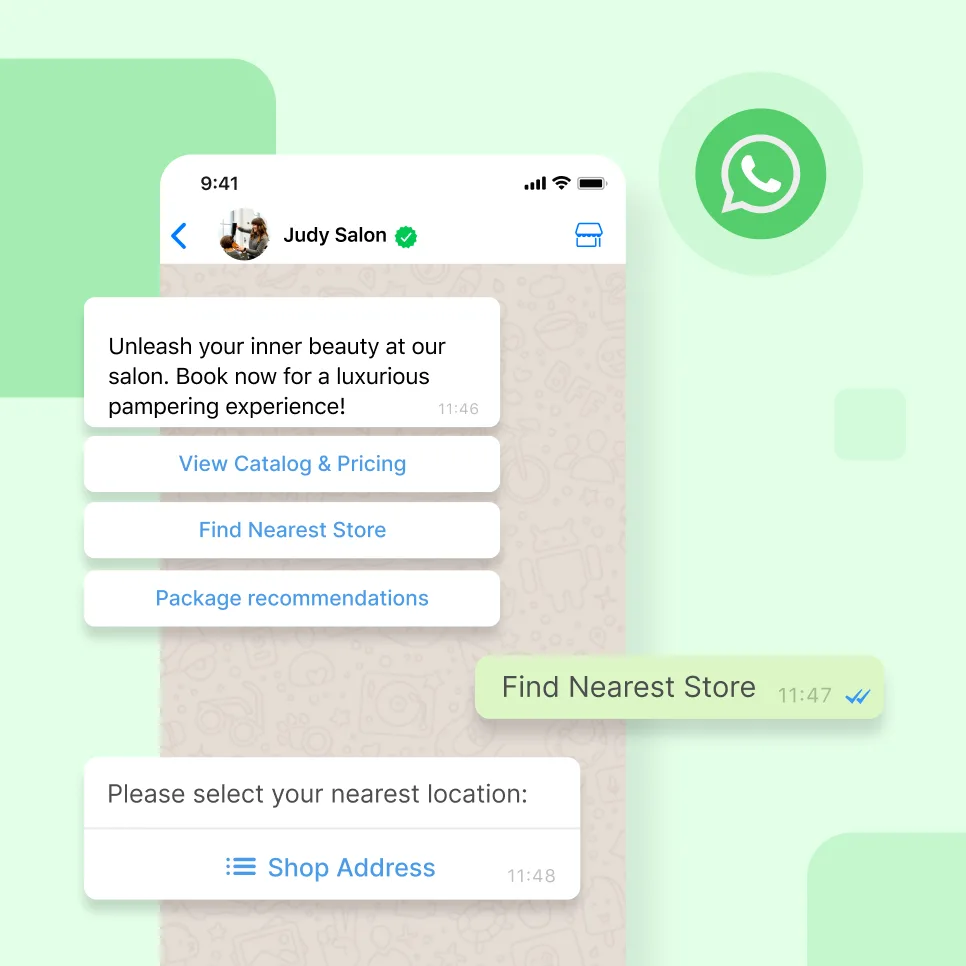
Once you have your shortened URL with UTM parameters, you can share it on WhatsApp. You can embed the link as a call-to-action interactive button so customers can react easily.
Step 3: Analyze the traffic
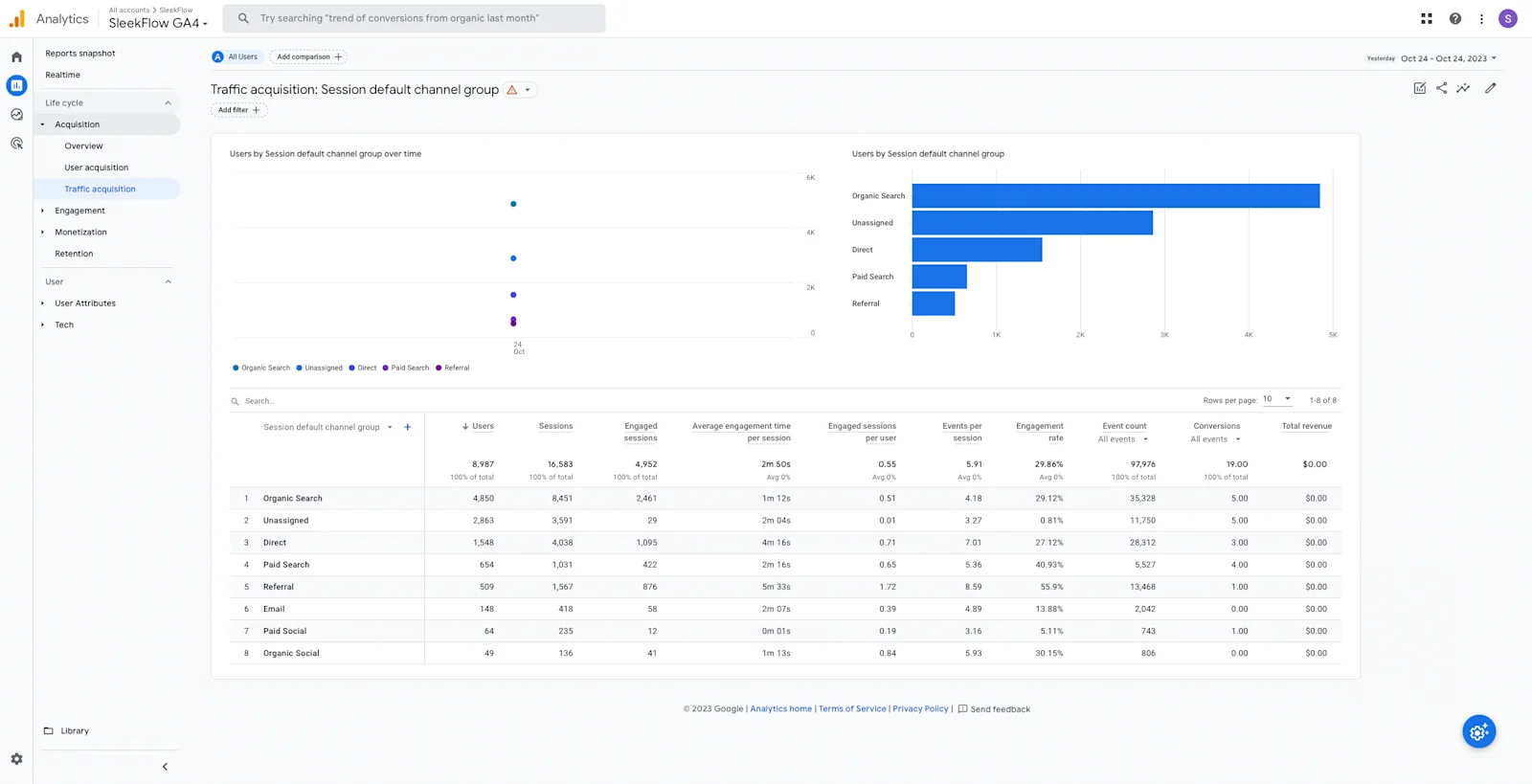
In Google Analytics 4, you can go to Reports > Acquisition > Traffic Acquisition to see the traffic from "whatsapp /social".
Identifying WhatsApp lead sources
Determine the origin of contacts using these methods:
Method 1: Customize the initial message
If you're using a link to initiate a WhatsApp chat, you can customize the initial message based on the platform or campaign. Here’s how you can tailor the message:
Email Campaigns: Use a message like, "Hello! I'm reaching out from the email campaign."
Website Links: Use a message such as, "Hello! I found you on your website."
Explore more about how to customize your WhatsApp link.
Method 2: Use Google Tag Manager
Google Tag Manager (GTM) is a powerful tool that can help you track clicks on a "Chat with us on WhatsApp" link or button on your website. By setting up tags and triggers in GTM, you can send this data to Google Analytics to determine the lead source.
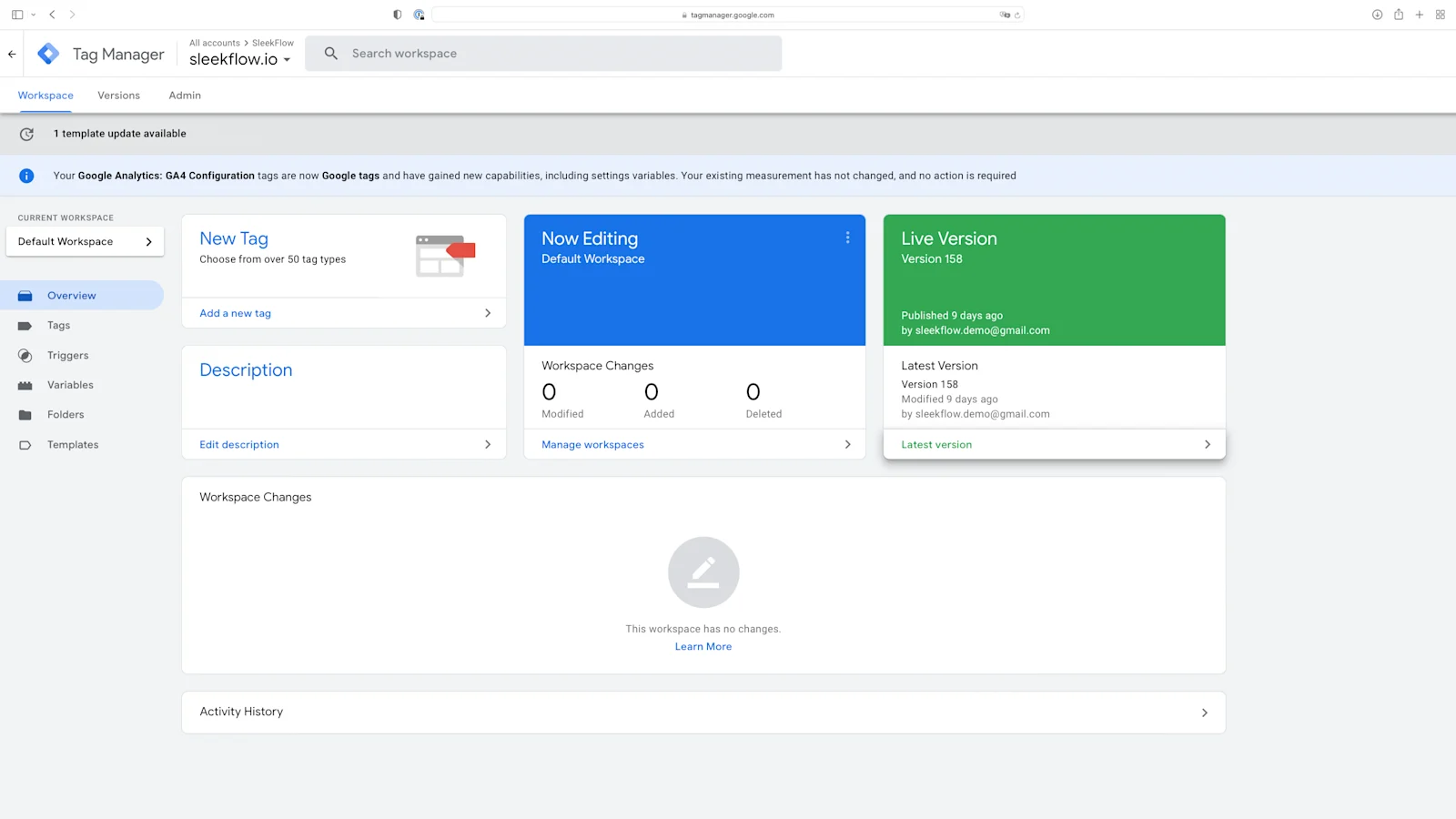
Here's a step-by-step guide on how to track WhatsApp link clicks using Google Tag Manager:
Step 1: Create a new tag
Log in to your GTM account.
click on "Tags" in the left sidebar, then click on "New".
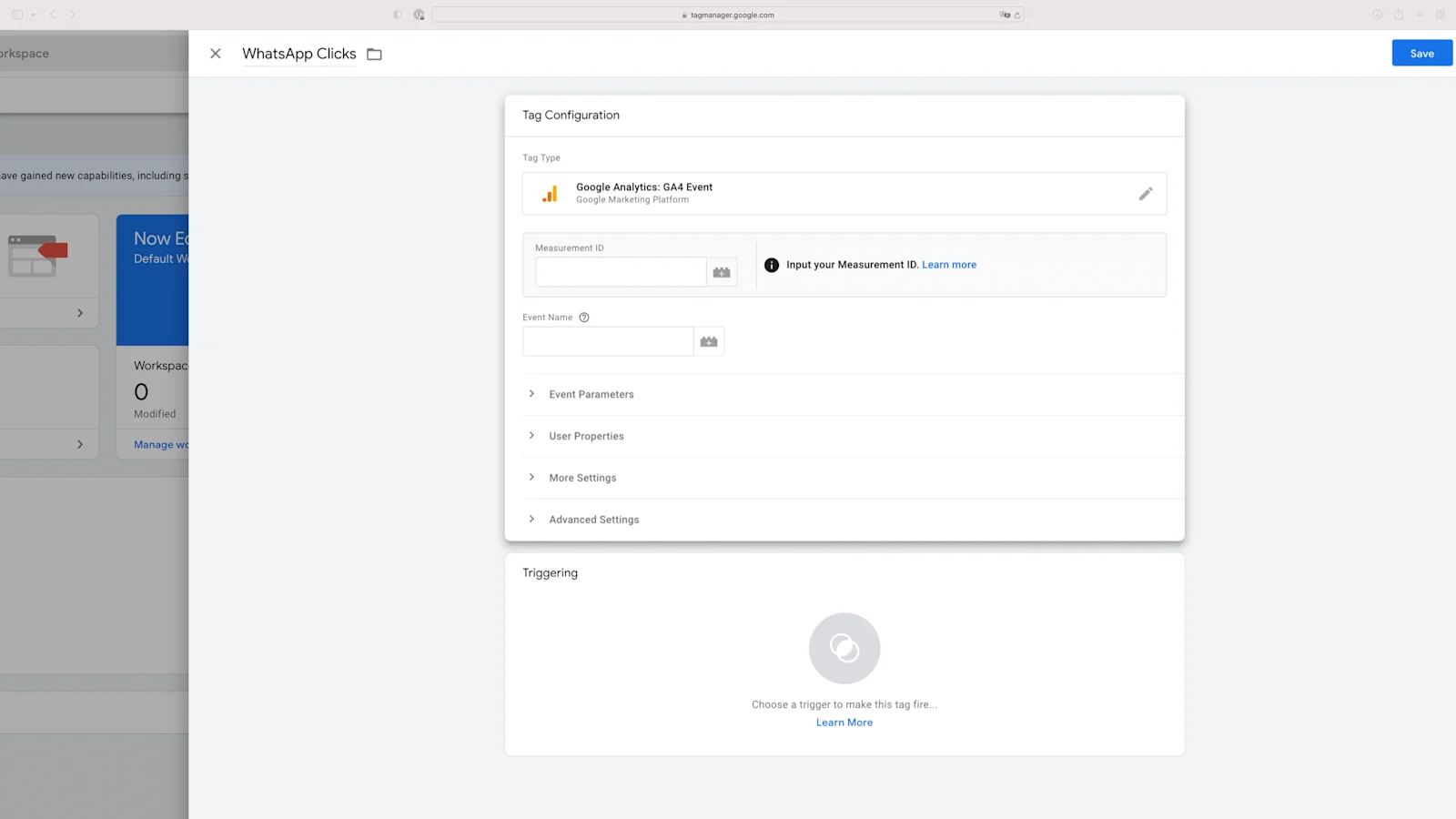
Name the tag (e.g., "WhatsApp Clicks").
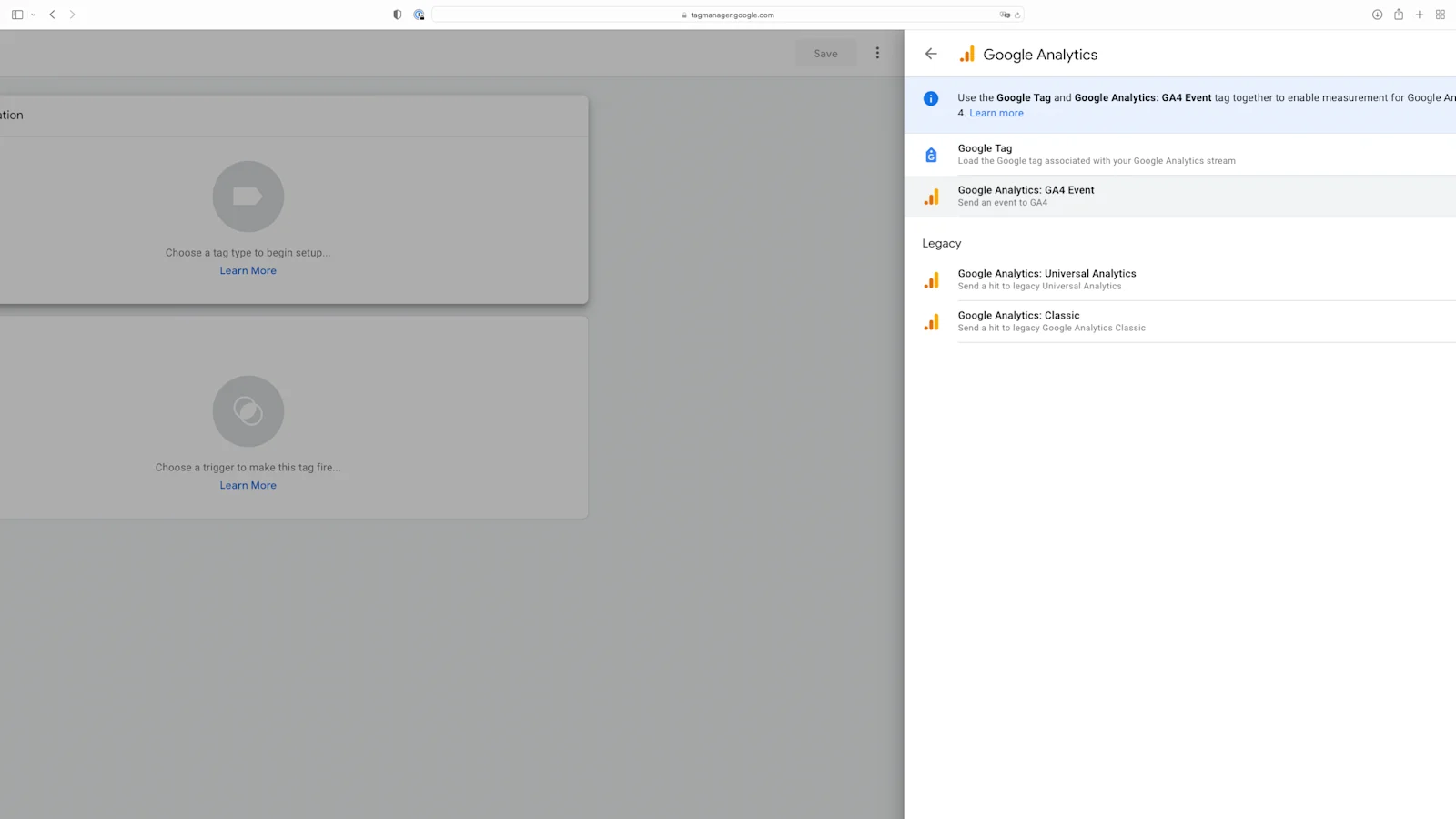
Click on "Tag Configuration" and choose "Google Analytics: GA4 Event" as the tag type
Click on “Configuration Tag” and choose “None- Manually Set ID” in the dropdown menu
Copy your GA4 Measurement ID from your GA4 account and paste it into the required field.
Name your event (e.g., "whatsapp_clicks")
Step 2: Create a new trigger
Click on "Triggering" below the “Tag Configuration”
Name the trigger (e.g., "WhatsApp Clicks").
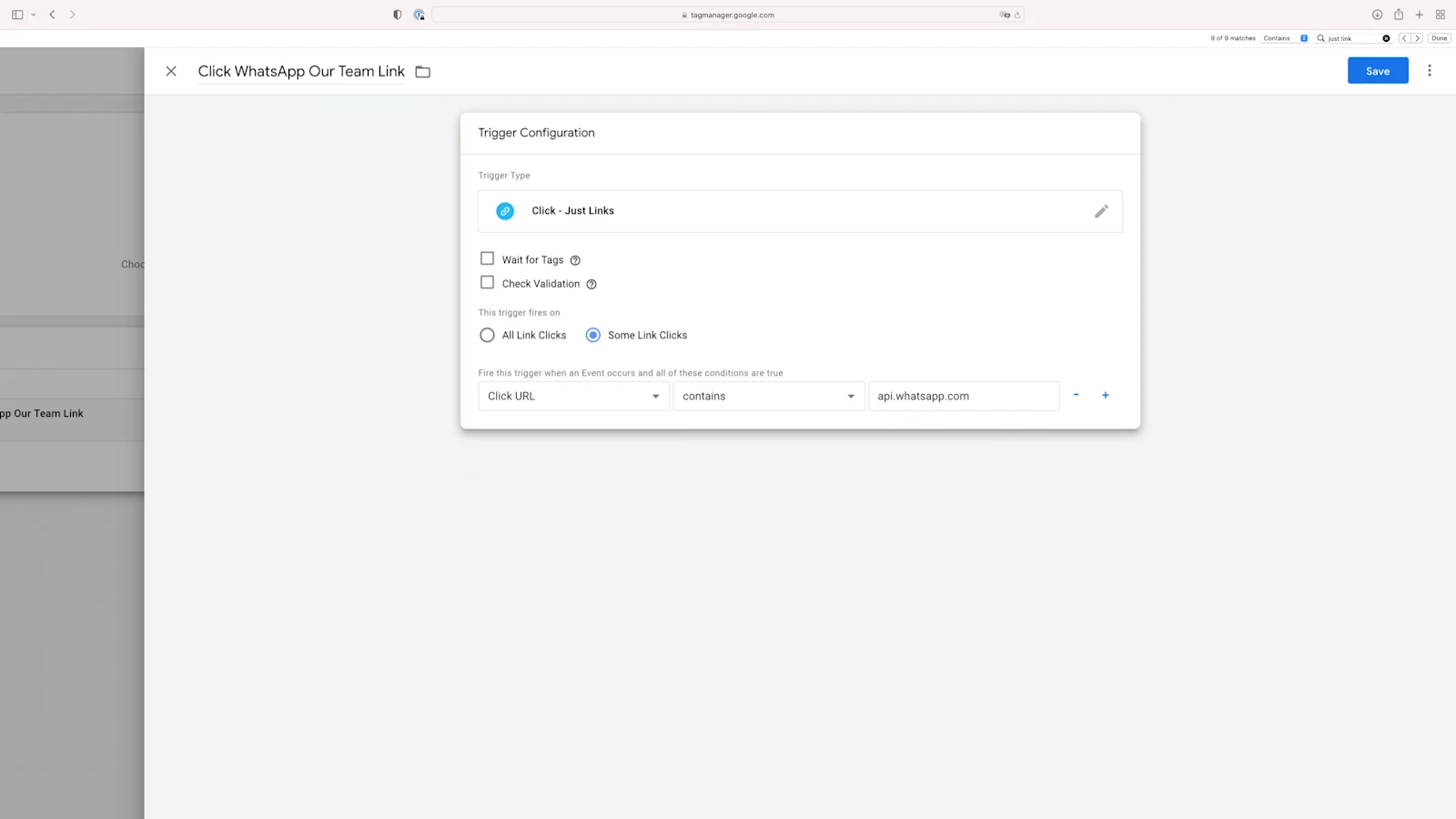
Click on "Trigger Configuration" and choose "Just Links" as the trigger type.
Choose "Some Link Clicks" for “This trigger fires on” and set the conditions. For instance, you might set it to trigger when the "Click URL" contains "wa.me" or "api.whatsapp.com".
Step 3: Publish changes
Once you've set up the tag and trigger, click on "Save”, “Submit” and “Publish” in the upper right to publish the changes to your live website.
Step 4: Check in Google Analytics 4
After some time, you can go to Google Analytics to review the events being tracked. Here's how to do it:
Navigate to Report > Engagement > Events.
Look for the event named "whatsapp_clicks", assuming you set it up as described.
With this event data, you can:
Segment the events by source/medium.
Identify where users were before clicking on the WhatsApp link.
This can give you insights into which channels or campaigns are driving the most WhatsApp interactions.
WhatsApp Marketing vs. Email Marketing
When comparing WhatsApp and email marketing for ROI, consider these factors:
The question, "What is the success rate of WhatsApp marketing?" really depends greatly on the quality and creativity of the campaigns. This applies similarly to email marketing.
However, WhatsApp has undeniable potential as a powerful marketing tool, especially with the WhatsApp Business API offering several advantages over the free WhatsApp Business App for WhatsApp ROI optimization.
Optimizing WhatsApp ROI
To enhance WhatsApp ROI, leverage the WhatsApp Business API with these strategies:
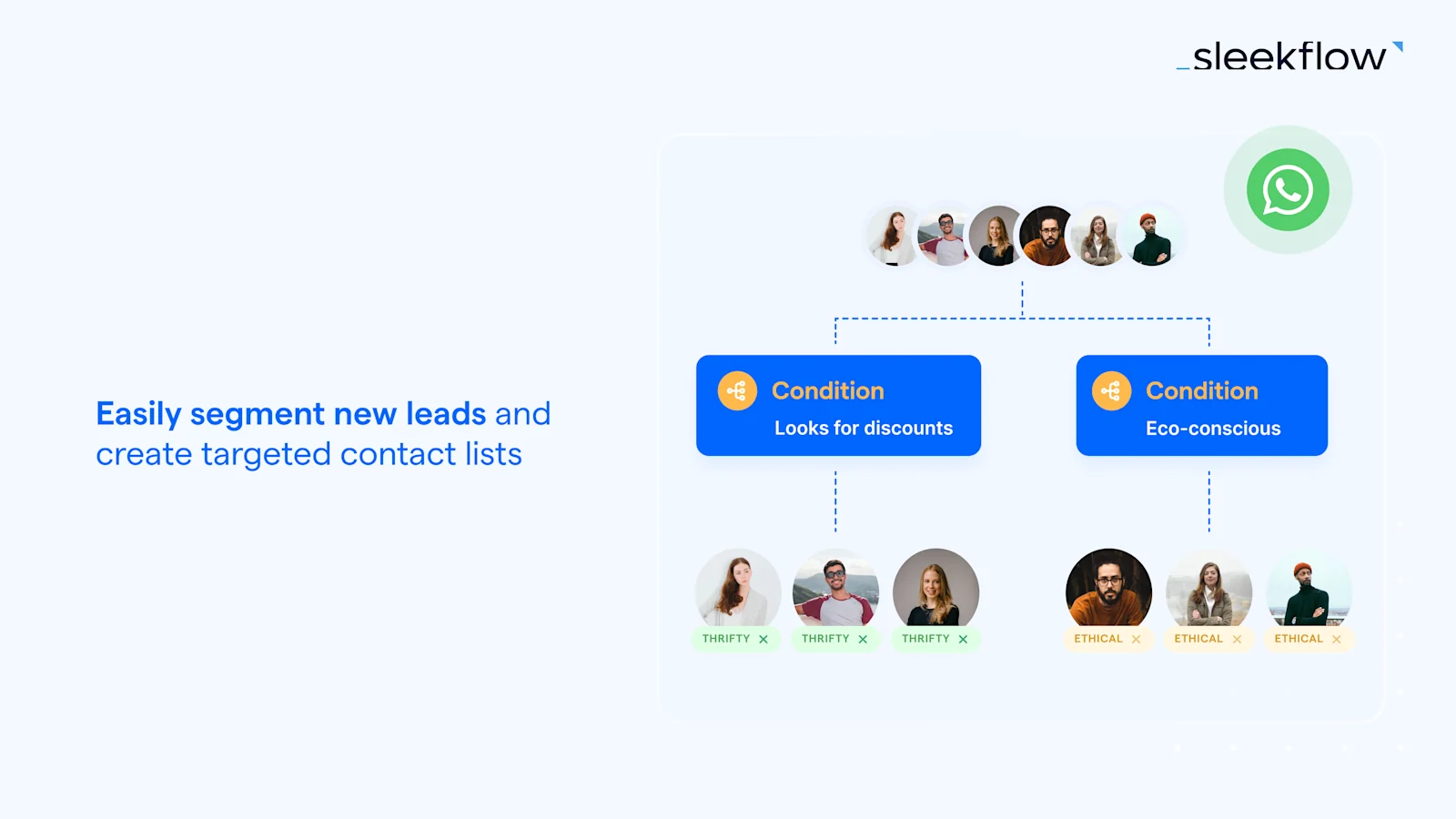
Method 1: Audience segmentation
The WhatsApp API also enables businesses to target specific audiences more effectively. For example, if a broad targeting approach fails to engage customers, businesses can create a more tailored audience list based on conversation histories and customer interests.
You can then test the effectiveness of different messages for specific groups based on:
Demographics
Interests
Behavior
By doing this, you can refine your targeting and messaging strategies to better resonate with your intended audience.
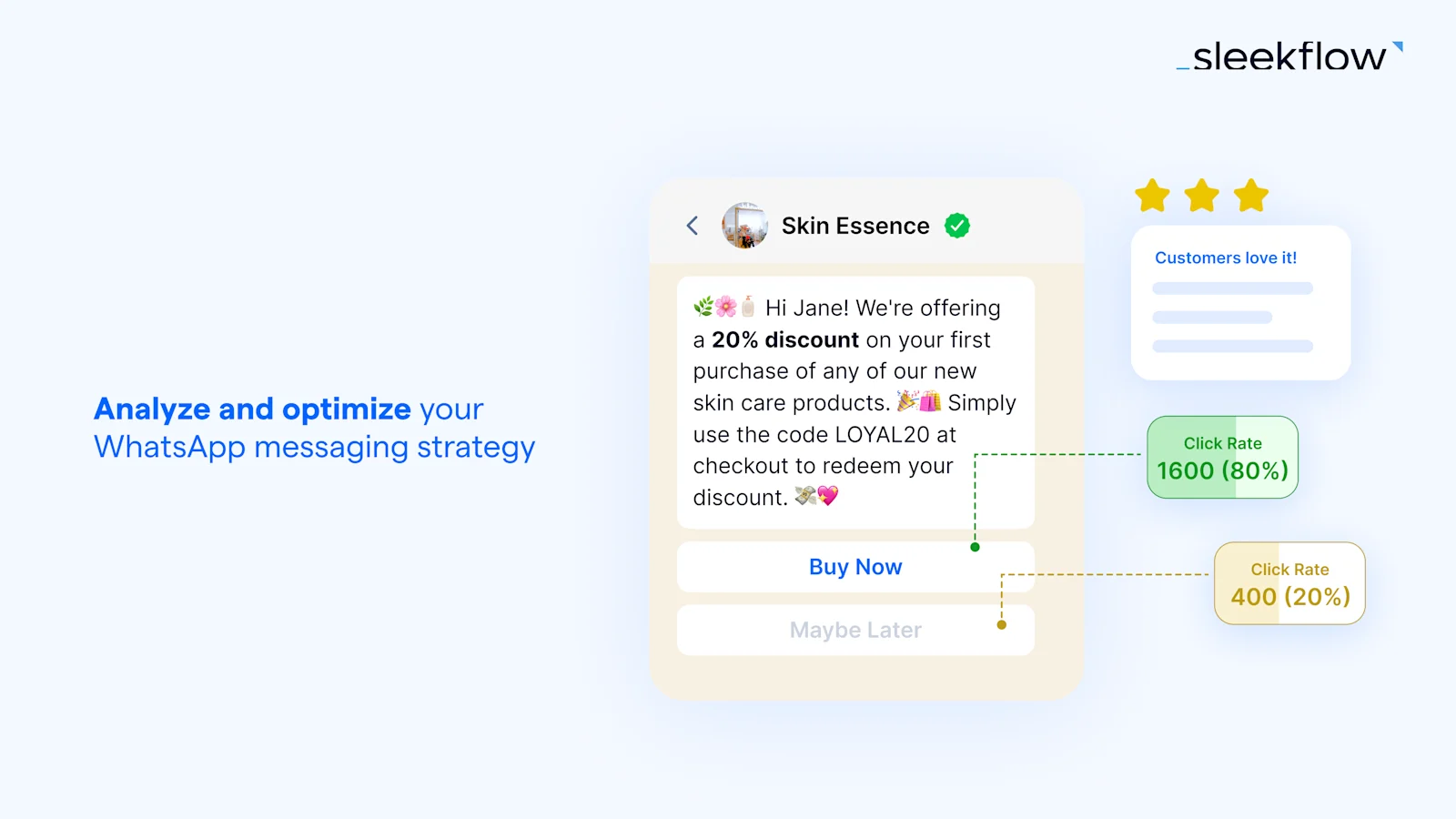
Method 2: A/B testing
Businesses can evaluate the effectiveness of various elements in driving conversions, including:
CTAs (Call-to-Actions)
Message content
Visual elements
Timing
Frequency
This iterative process empowers businesses to continually improve their conversion rates and achieve better results in their WhatsApp marketing efforts.
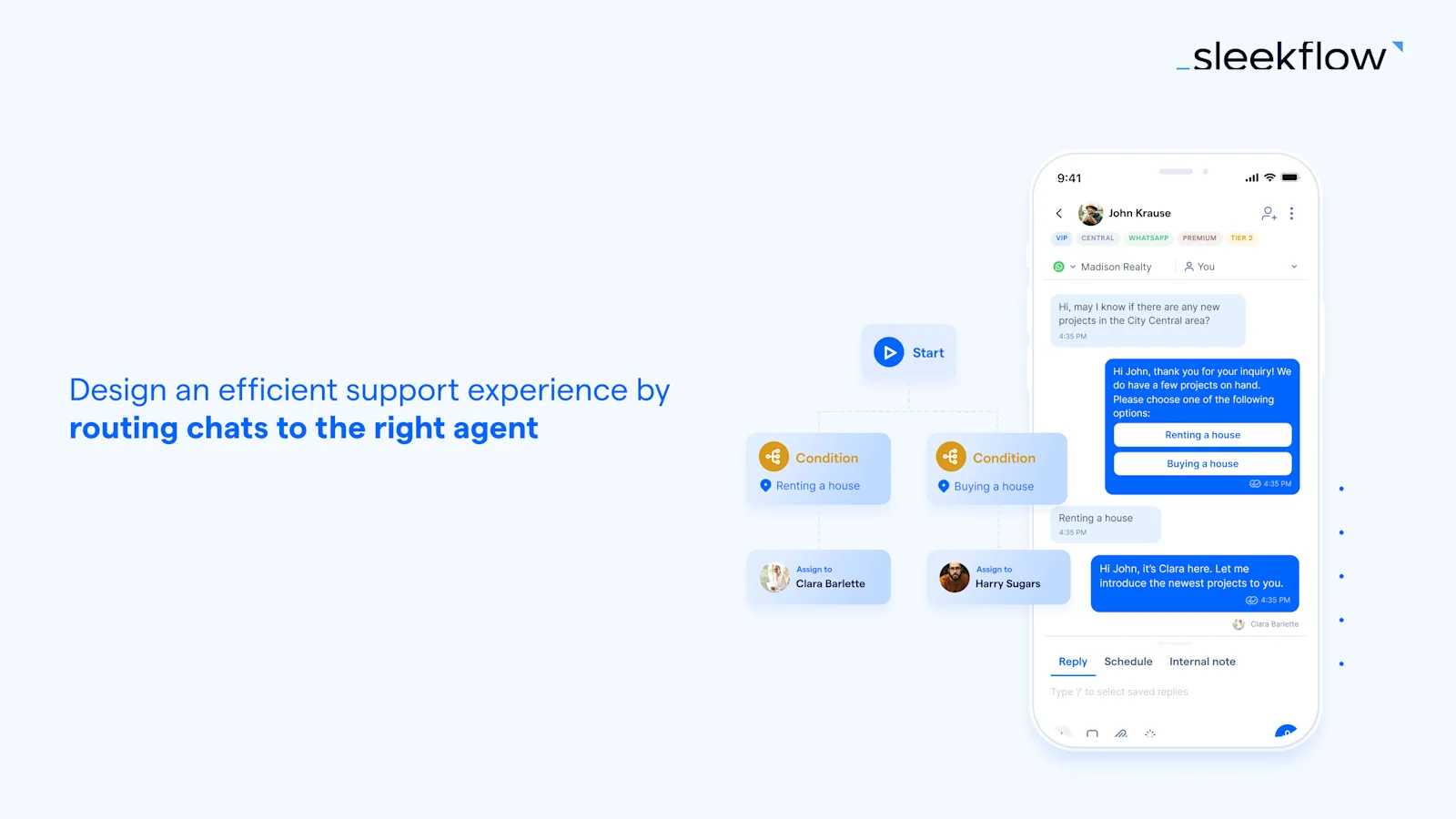
Method 3: Automated engagement
WhatsApp Business API can help businesses establish automated conversation flows and guide users on the next steps depending on the replies.
Here’s how it works:
Design message templates with button-based responses.
Provide customers with quick, convenient reply options.
Ensure a seamless and user-friendly communication experience.
This step-by-step approach encourages customers to take desired actions
Method 4: Integration with existing tech infrastructures
Integrating WhatsApp with existing systems offers several benefits for businesses:
Provides rapid access to customer data, ensuring agents have the most up-to-date information.
Enables agents to serve customers more effectively by avoiding repetitive or redundant questions.
Streamlines communication processes, leading to improved overall customer satisfaction.
Integrate and automate with AI agents, to improve efficiencies and support existing teams
SleekFlow: WhatsApp Marketing Software With Business Analytics Dashboard
Still on the fence about using WhatsApp for your business? The key is to embrace a platform that streamlines your entire marketing funnel. That’s where SleekFlow comes in.
As an official WhatsApp Business Solution Provider (BSP), SleekFlow is a comprehensive platform designed to turn your conversations into conversions.
SleekFlow's WhatsApp Business API helps you engage customers, automate workflows, and drive sales effortlessly. Here’s a glimpse of what you can do:
Automate with AI: Deploy specialized AI agents to handle lead qualification, recommend products, and update your CRM 24/7. Never miss a lead again.
Build Smart Workflows: Use a simple drag-and-drop chatbots builder to design automated customer journeys for everything from abandoned cart reminders to lead nurturing campaigns. No coding required.
Capture Every Lead: Turn website visitors into WhatsApp contacts with an intelligent live chat widget that continues the conversation even after they leave your site.
Send Personalized Campaigns: Reach thousands of customers with targeted broadcast messages, achieving open rates of up to 98%.
Track Your Success: Get a clear view of your marketing performance with a powerful analytics dashboard that tracks everything from first contact to final sale.
Unify Customer Data: Consolidate all your customer interactions from different channels into a single, powerful social CRM.
Want to see how this works in action? Watch our complete WhatsApp marketing strategy guide below.
How Pristine Aroma achieved a 13X ROI on WhatsApp marketing with SleekFlow
Pristine Aroma, a home fragrance brand, was primarily using traditional email marketing to reach its customers.
The brand noticed that their email campaigns were failing to connect with their audience. They needed a more direct way to capture their customers' attention.
Pristine Aroma switched to SleekFlow's WhatsApp Business API. This allowed them to send personalized broadcast messages directly to customers' WhatsApp inboxes.
A 13X WhatsApp marketing return on investment (ROI).
An 18% conversion rate from the broadcast.
High engagement metrics, including a 56% open rate and a 16% click-through rate.
Connect to WhatsApp Business API now!
Connect to WhatsApp Business API and unlock powerful tools to engage your audience.

