How to build a high-impact customer experience strategy (with practical frameworks)


A strong customer experience strategy is no longer optional. It is a core growth driver that directly influences retention, lifetime value and brand reputation.
According to PwC’s Experience is Everything report, 73% of consumers say customer experience is a key factor in purchasing decisions. Yet many organisations still struggle to deliver consistent journeys across channels.
For enterprises and growing SMEs, the challenge is not recognising the importance of CX — it is operationalising it at scale across marketing, sales and support.
This guide provides a practical, enterprise-ready framework for designing and continuously optimising a customer experience strategy, supported by real-world examples.
What is a customer experience strategy?
A customer experience strategy is a structured plan that defines how your organisation delivers consistent, valuable, and personalised interactions across the entire customer journey from awareness to loyalty.
It includes:
Cross-department alignment (sales, marketing, support, operations)
Clearly defined customer journey stages
Integrated customer data across systems
Measurable KPIs (e.g. response time, CSAT, conversion rate)
Ongoing optimisation based on analytics and feedback
Unlike isolated initiatives (such as launching a chatbot or running a one-off campaign), a CX strategy connects systems, people and processes into one unified experience.
Why customer experience strategy matters for businesses
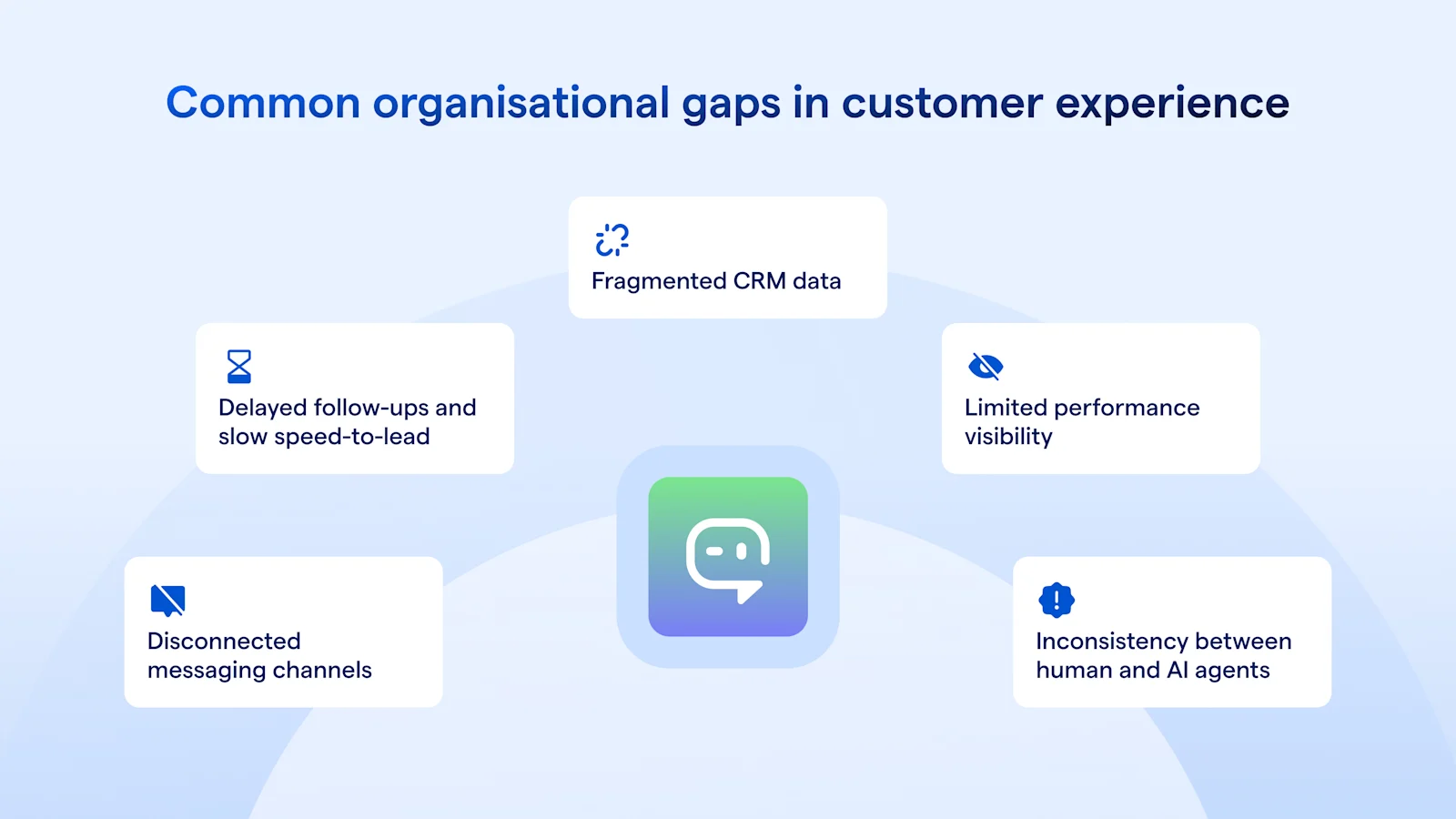
In SleekFlow’s whitepaper on customer experience in SEA, we discovered that customer loyalty is no longer driven by price or convenience. Instead, consumers expect quality and meaningful engagement from the brands they support.
Common organisational gaps include:
Disconnected messaging channels
Delayed follow-ups and slow speed-to-lead
Fragmented CRM data
Limited performance visibility
Inconsistency between AI and human agents
A mature customer experience strategy addresses these issues by centralising conversations, data, and automation, especially across high-engagement channels such as WhatsApp, Instagram, and live chat.
How to create a good customer experience strategy
Below is a practical framework designed for enterprises and SMEs managing high volumes of customer interactions.
1. Align the entire organisation around the customer
A successful customer experience strategy cannot sit within a single department.
Marketing → awareness and engagement
Sales → qualification and conversion
Support → retention and post-purchase care
IT → integrations and automation
Compliance/legal → data governance and security
2. Listen to customer feedback continuously
A strong customer experience strategy must be data-driven.
Collect feedback through:
Post-resolution CSAT surveys
In-chat feedback forms
Net Promoter Score (NPS) tracking
Conversation analytics
Channel performance dashboards
Practical implementation steps
Automate CSAT collection after ticket closure
Tag conversations by issue category
Track first response and resolution times
Monitor drop-offs across funnel stages
3. Train your team — both human and AI
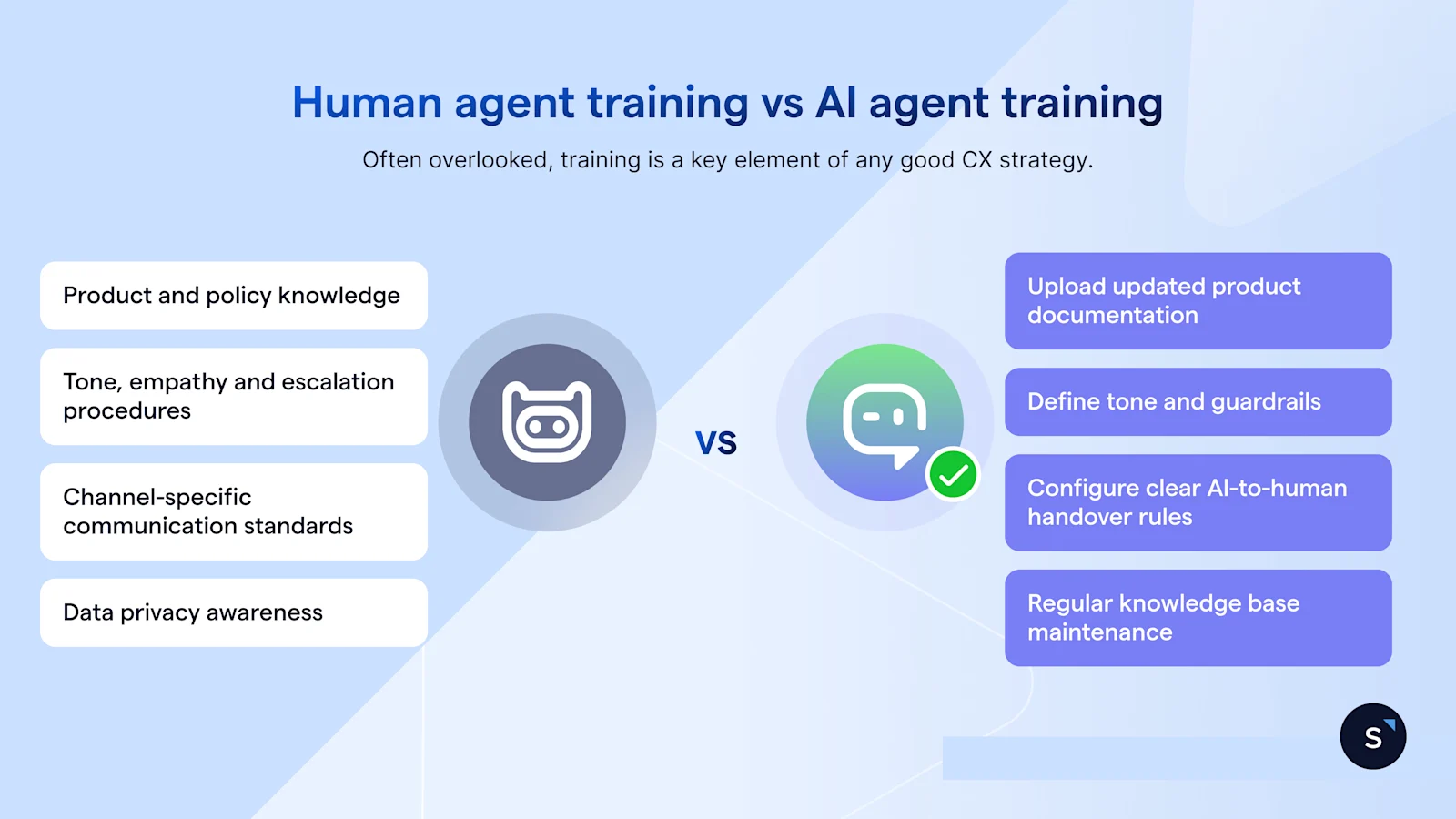
Training is often the most overlooked element of a customer experience strategy.
Human agent training should include:
Product and policy knowledge
Tone, empathy, and escalation procedures
Channel-specific communication standards
Data privacy awareness
AI training considerations:
Upload updated product documentation
Define tone and guardrails
Configure clear AI-to-human handover rules
Regularly maintain knowledge bases
Effective training ensures:
Faster first response times
More accurate lead qualification
Reduced operational workload
Consistent brand experience
4. Identify and resolve customer experience gaps
An effective customer experience strategy requires identifying friction points in the customer journey and optimising these steps.
5. Continuously refine your customer experience strategy
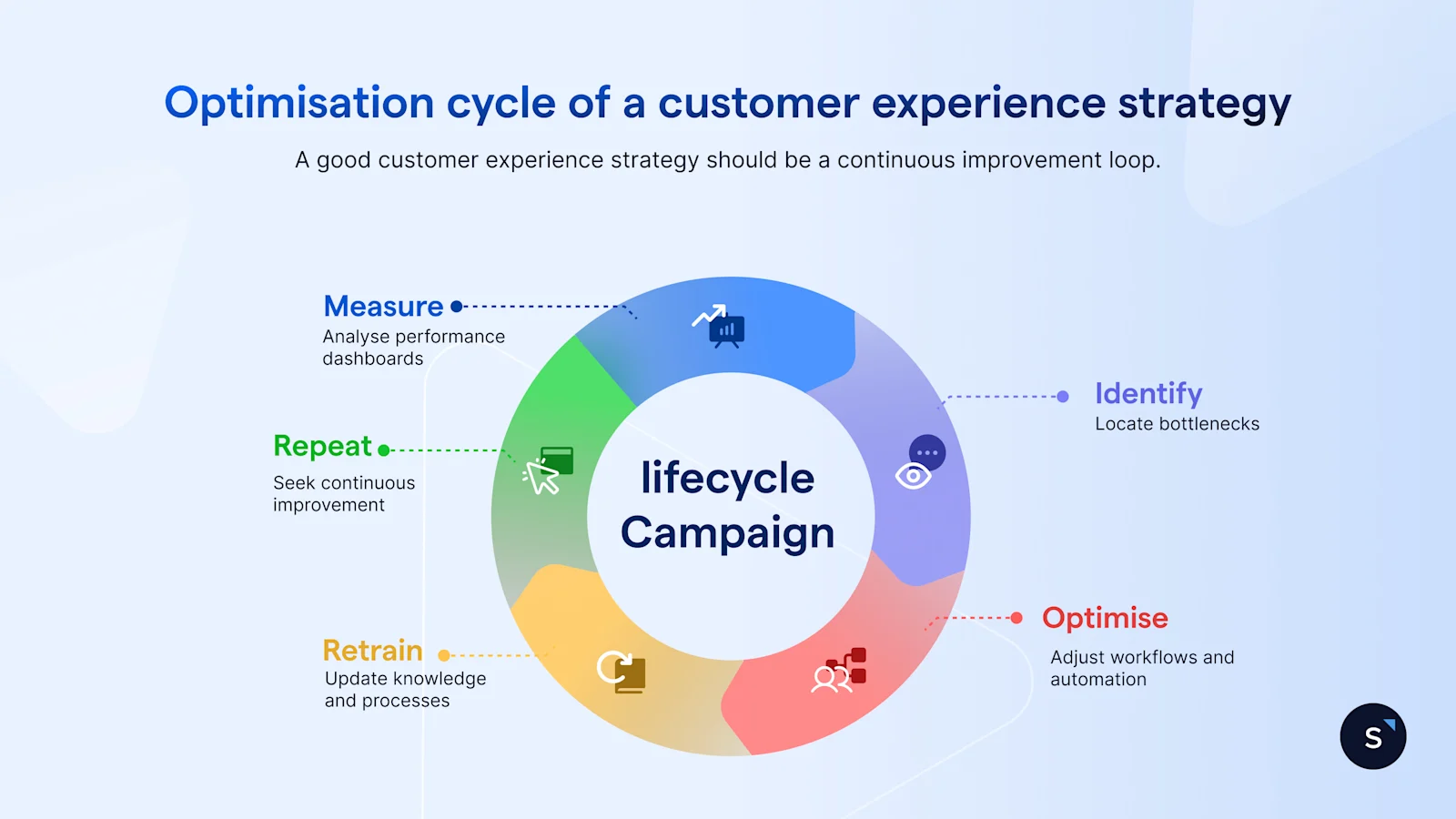
A customer experience strategy should operate as a continuous improvement loop.
Optimisation cycle
Measure → Analyse performance dashboards
Identify → Locate bottlenecks
Optimise → Adjust workflows and automation
Retrain → Update AI knowledge and processes
Repeat
Core metrics to monitor
First response time
Resolution time
Lead qualification score
Broadcast read and response rates
Conversion by segment
CSAT and NPS
How SleekFlow supports the customer experience strategy for businesses
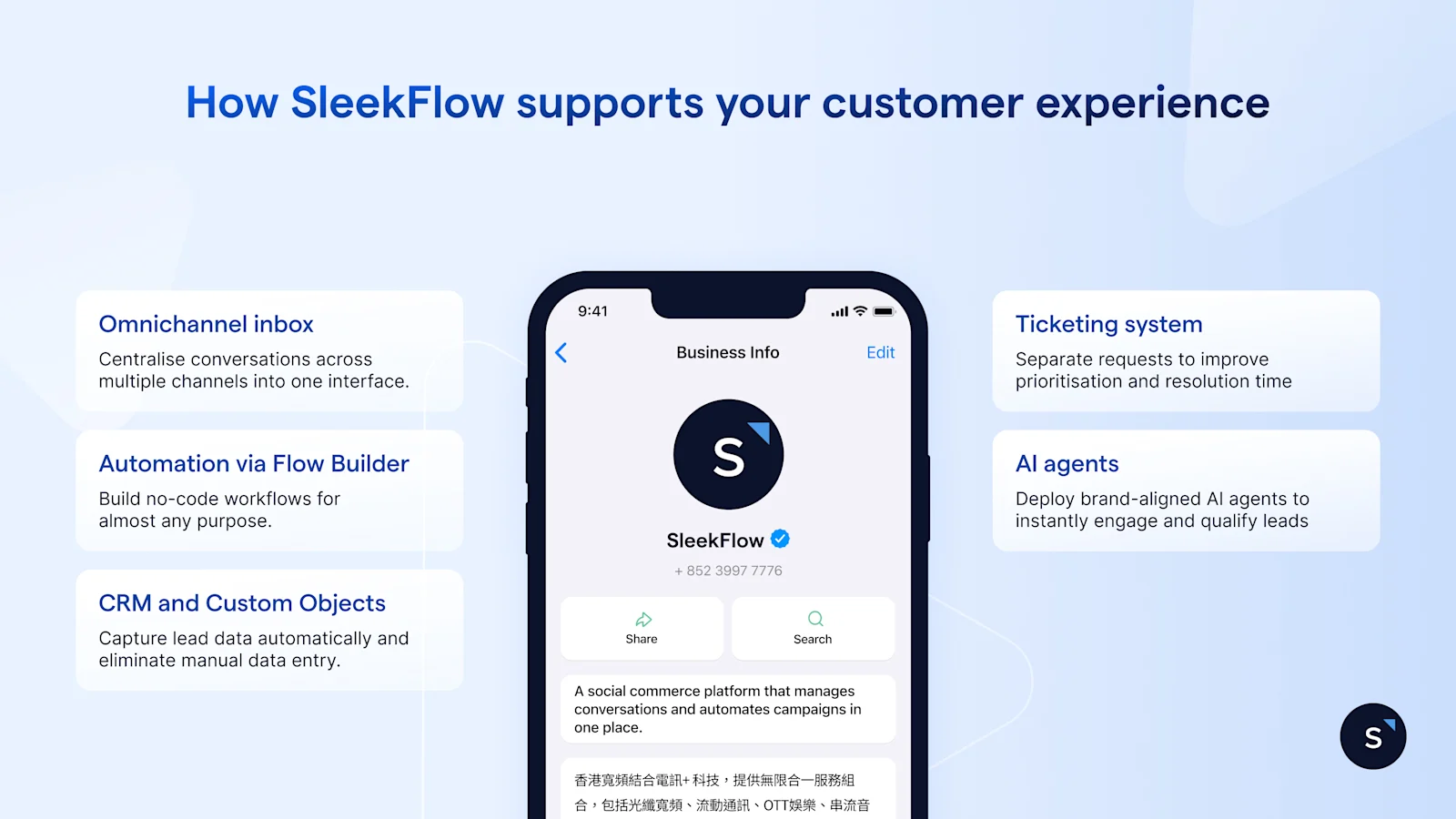
For organisations operating across WhatsApp, Instagram, Facebook Messenger, live chat, and more, SleekFlow comes with all the tools you need for your customer experience:
Omnichannel inbox
Centralise conversations across channels into a single interface. No more switching between different devices or messaging apps.
Automation via FlowBuilder
Build no-code workflows to:
Qualify leads
Trigger CRM updates
Route enquiries to the appropriate team
Automate follow-ups
CRM and custom object integration
Capture lead data automatically to eliminate manual data entry. You can even sync SleekFlow with Salesforce, HubSpot, and other CRM systems.
Ticketing system
Separate support requests from general enquiries to improve prioritisation and SLA management.
AI Agents for intelligent engagement and qualification
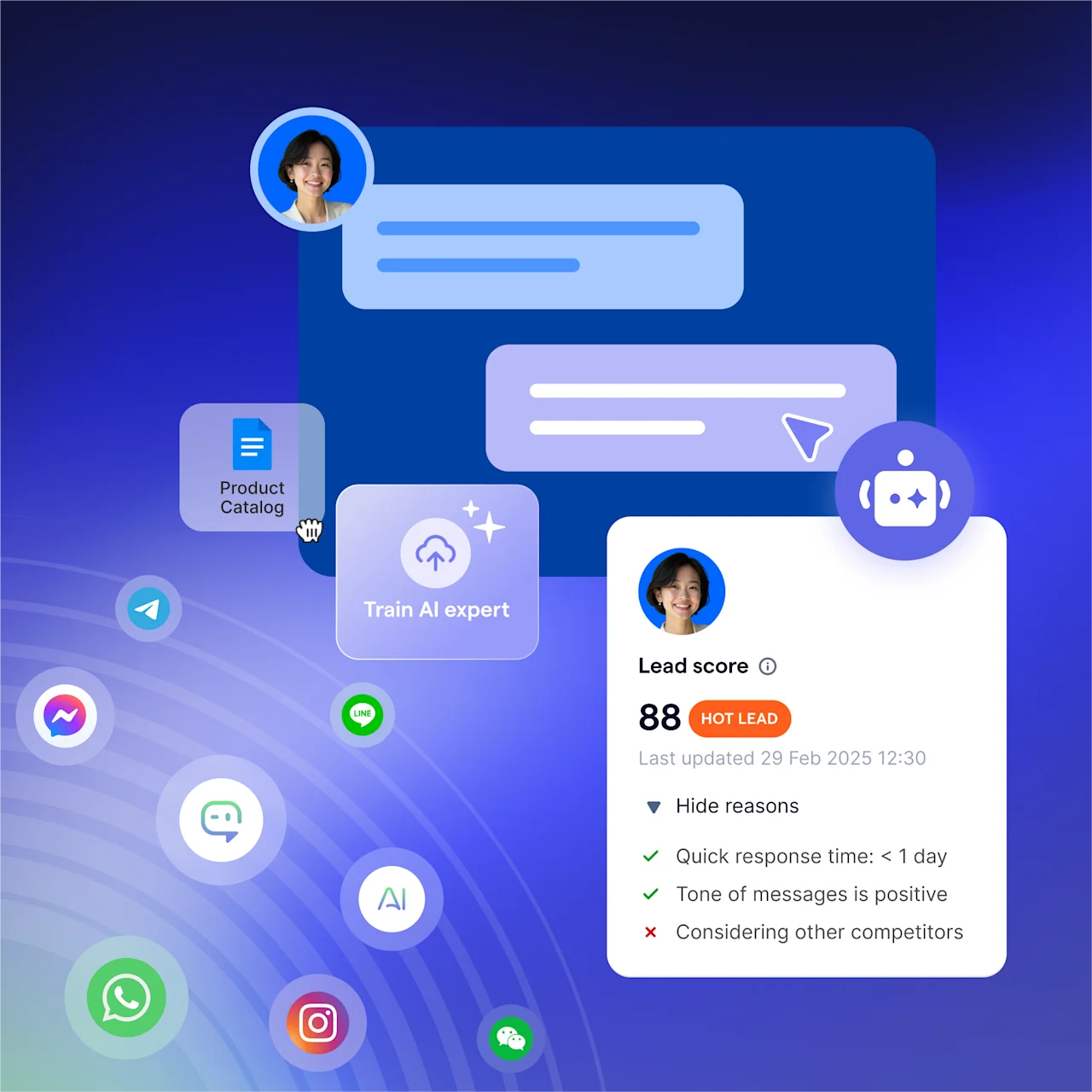
Deploy configurable AI Agents to automate lead qualification, customer support, and internal assistance without compromising control.
SleekFlow AI Agents can:
Engage prospects instantly, 24/7
Ask qualifying questions and score leads
Provide product recommendations
Summarise conversations before human handover
Update CRM records automatically
Operate within defined tone and response boundaries
Unlike generic chatbots, AI Agents can improve your customer experience by learning from your knowledge base, including product documentation, pricing sheets, and FAQs, ensuring responses remain accurate and brand-aligned.
Start for free!
Grow your revenue and turn chats into conversions with AI agents. Try SleekFlow for free, forever.


