How to improve your customer loyalty programmes with CRM


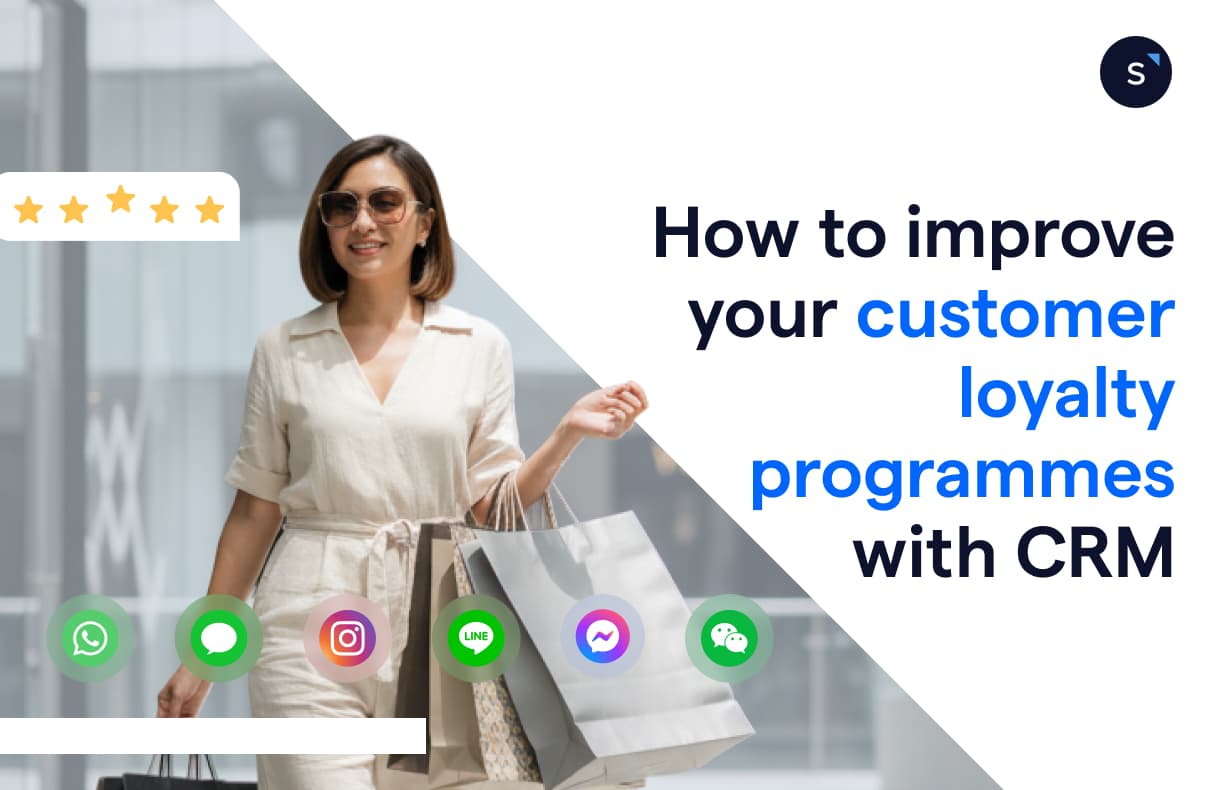
Customer loyalty programmes are no longer a “nice-to-have” in Singapore. They’re a baseline expectation — and that’s exactly the problem: customers are enrolled in multiple programmes, but only actively engage with a few.
YouGov found that among Singaporeans who use customer reward programmes, 38% regularly use just one, while 30% use two and 20% use three (with only 12% using four or more in the past three months).
Across Southeast Asia, about 92% of customers are more enticed to shop where a loyalty programme is part of the deal (survey range often cited as 86–92%).
Top-performing loyalty programmes can lift revenue from customers who redeem points by 15–25% annually, by increasing purchase frequency, cartsize, or both.
Why you need a CRM for running loyalty programmes


A loyalty programme isn’t just about giving points to your customer, it’s a data-and-experience system. Without CRM, most programmes fail for the same reasons:
1) You can’t personalise at scale without a single customer view
Singapore customers are value-conscious and time-poor. If your offers don’t match their intent, they ignore you. CRM helps unify:
purchase history and average order value
channel preferences (WhatsApp vs email vs IG)
service history (returns, complaints, delivery issues)
loyalty status (points, tier, benefits used)
2) Loyalty ops makes data get messy, fast (and “manual” doesn’t scale)
Once you have tiers, birthday rewards, win-back offers, partner perks, and service recovery gestures, the manual workload explodes. A CRM-led approach lets you automate:
enrolment and welcome journeys
tier upgrades/downgrades
replenishment reminders
lapsed-member win-back
service recovery credits (e.g., “sorry points”)
3) Compliance is part of loyalty
Because loyalty programmes collect and use personal data, you must support consent and responsible marketing.
In Singapore, organisations generally need to comply with PDPA obligations (including consent) for collecting/using personal data, and direct marketing to Singapore numbers may also involve Do Not Call (DNC) requirements.
For bulk commercial electronic messages, the Spam Control Act framework and best practices emphasise clear sender info and a working unsubscribe facility.
Benefits of using a CRM for loyalty programmes

Better retention economics (and measurable impact)
Retention is usually where loyalty programmes deliver the fastest, cleanest ROI — because you’re increasing the lifetime value of customers you’ve already paid to acquire. One widely cited benchmark is that acquiring a new customer can cost five to 25 times as much as retaining an existing one, which is why even small improvements in repeat behaviour can have an outsized impact on profits.
A CRM-led loyalty strategy makes that impact measurable and optimisable. Instead of just tracking “members” and “redemptions”, you can connect loyalty actions to the metrics finance teams care about: repeat purchase/renewal rate, customer lifetime value (LTV), and churn risk by cohort
Faster, more relevant engagement
In Singapore and Southeast Asia, chat-first experiences are often where loyalty is won or lost (support, delivery updates, appointment reminders, VIP concierge). CRM-driven segmentation + automation makes those interactions consistent.
Standardise execution and reduce manual mistakes
Instead of running loyalty in spreadsheets and disconnected tools, a CRM helps you standardise how loyalty is executed across teams and channels. That means fewer customer-facing errors that quietly damage trust, such as:
Sending the wrong offer to the wrong segment
Missing tier upgrades or applying them late
Inconsistent answers when customers ask about points/benefits
Agents not seeing loyalty status during support conversations
Duplicate or conflicting messages from different teams
When loyalty is managed from a single system, your rules are consistent and customers experience your programme as reliable.
Features you need in a CRM to boost your loyalty strategy
Below is the “shortlist” that matters for CRM loyalty programs (and what to ask vendors in demos).
SleekFlow is an omnichannel conversational AI suite for customer engagement across channels like WhatsApp, Instagram, and live chat. Automation is supported via a no-code Flow Builder and performance tracking for broadcasts.
Examples of loyalty strategies you can run with CRM

1) Points + tier programme (with “progress nudges”)
CRM trigger examples
“You’re 20 points away from Silver” (sent after purchase)
“Double points week for categories you actually buy” (segment-based)
“Tier expiring soon” (retention protection)
CRM tip: Use last-visit date + preferred outlet + service type to personalise nudges.
2) VIP/Paid membership (when your benefits are truly differentiated)
Paid loyalty can drive stronger spending behaviour than free programmes in certain contexts.
CRM is essential here to:
deliver member-only benefits reliably
prevent benefit abuse
track renewal risk signals (complaints, missed deliveries, drop in usage)
3) Referral + community perks (high leverage, low discount)
Use CRM to detect “promoter-like” behaviours:
high repeat rate
high NPS/CSAT feedback
frequent sharing/forwards (where measurable)
Then automate referral asks only to those segments.
5) Chat-first loyalty journeys using SleekFlow
Loyalty can be experienced through conversations. Below is an example of how a restaurant uses CRM-triggered follow-ups and targeted messaging to lift engagement.
How LUBUDS Group incentivises repeat visits to their restaurants with a CRM

LUBUDS F&B Group uses SleekFlow’s segmentation and broadcast capabilities to incentivise repeat visits across its restaurant brands.
By leveraging customer data collected from both online and offline touchpoints, LUBUDS sends targeted broadcast messages based on customer behaviour and needs — rather than generic mass promotions. Campaign performance is measured through metrics such as repeat customer rate, allowing the team to continuously refine segmentation and improve ROI.
Read more about LUBUDS Group’s success with SleekFlow’s social CRM here.
Tips for building a high-performing CRM-led loyalty programme

Start with outcomes, not mechanics
Pick one primary goal to focus on for the next 90 days:
increase second-purchase rate
increase 90-day repeat rate
reduce churn for memberships
improve redemption (without margin collapse)
Then design rewards that support that goal.
Build different segmentation models you can actually run
A simple model beats an “everyone gets everything” programme:
Recommended baseline segments
New: first purchase within 30 days
Active: purchased within 60 days
At-risk: no purchase 60–120 days
Lapsed: 120+ days
VIP: top 10–20% by spend or frequency
Tie every message and benefit to a segment rule.
Use automation for consistency (and humans for empathy)
A practical split:
Automation: enrolment, points/tier updates, reminders, FAQs
Humans: exceptions, special requests, complaints
Operationally, this means:
Capture opt-ins clearly at enrolment
Store channel preferences (WhatsApp, Instagram, Messenger, etc.)
Provide unsubscribe/opt-out paths and honour them promptly
Align data use to PDPA consent expectations
Don’t ignore channel rules (especially WhatsApp)
If you use WhatsApp Business API, outbound messaging often requires approved templates outside the customer service window, and you should ensure opt-in. You’ll see competitors also stress opt-in requirements for WhatsApp broadcasts.
How SleekFlow’s Social CRM can help your loyalty programmes (CRM-led, chat-first)
SleekFlow is built around omnichannel conversations and automation, which is useful when your loyalty experience happens in WhatsApp, Instagram DMs, live chat, and beyond.
Omnichannel inbox + customer context so teams don’t lose history across channels (and can collaborate).
Automation with Flow Builder to trigger loyalty journeys from events and customer behaviour.
Broadcast campaigns + analytics to target segments and measure reads/replies.
AI-assisted selling/support: SleekFlow describes AI agents that understand customer history and help move inquiries to purchase.
If you want to move beyond basic points and run crm loyalty programs that actually increase repeat purchases and retention, SleekFlow helps you connect customer data with omnichannel conversations, automate the journeys that matter, and measure ROI from message to conversion. Explore SleekFlow’s automation and engagement capabilities, or book a demo to map your first CRM loyalty journey.

Start for free!
Grow your revenue and turn chats into conversions with AI agents. Try SleekFlow for free, forever.
Frequently Asked Questions
Share Article